AI That Works for People, Not Against Them.

At Futureai, we champion the responsible, transparent, and ethical use of artificial intelligence in business. Here's what that means in practice.

See Our Principles →
Responsible AI and thoughtful time management
Ethical AI Certified 2026

Our Core Ethical Principles

Six pillars that guide every recommendation, review, and piece of content we produce at Futureai.

Transparency

We disclose AI involvement in content creation and recommend tools that explain their decisions in plain language. No black boxes — our readers deserve to know how outputs are generated.

Fairness

AI systems should treat all users equally. We actively highlight tools that conduct regular bias audits and we refuse to recommend systems with documented discriminatory patterns.

🔒

Privacy

User data protection is non-negotiable. We rigorously review the data policies, retention practices, and third-party sharing terms of every tool we list in our directory.

👤

Accountability

Humans must remain in control. We advocate for AI that augments human judgment, not replaces it. Every high-stakes decision needs a human in the loop with genuine authority to override.

🌱

Sustainability

We consider the environmental footprint of AI compute. Large models carry real energy costs. We promote efficient AI usage, smaller specialized models, and providers with green energy commitments.

Accessibility

AI tools should be usable by everyone, regardless of technical background, ability, or budget. We score tools on ease-of-use for non-technical users and highlight free or affordable tiers.

Is Your Business Using AI Ethically?

Work through this checklist to assess your current AI practices across three critical dimensions.

Your progress
0/15 practices in place

Data & Privacy

Fairness & Bias

Transparency & Accountability

Ethical Automation: What to Automate (and What Not To)

Not every business process is suitable for full AI automation. Understanding where automation creates value — and where it creates risk — is one of the most important AI literacy skills in 2026.

✓ Automate These

  • Repetitive data entry tasks
  • Report generation & formatting
  • Email sorting & labeling
  • Meeting scheduling
  • Social media scheduling
  • Invoice processing

⚠ Don't Fully Automate

  • Final hiring decisions
  • Legal advice to clients
  • Medical diagnoses
  • Emotional support conversations
  • High-stakes financial decisions
  • Crisis communications
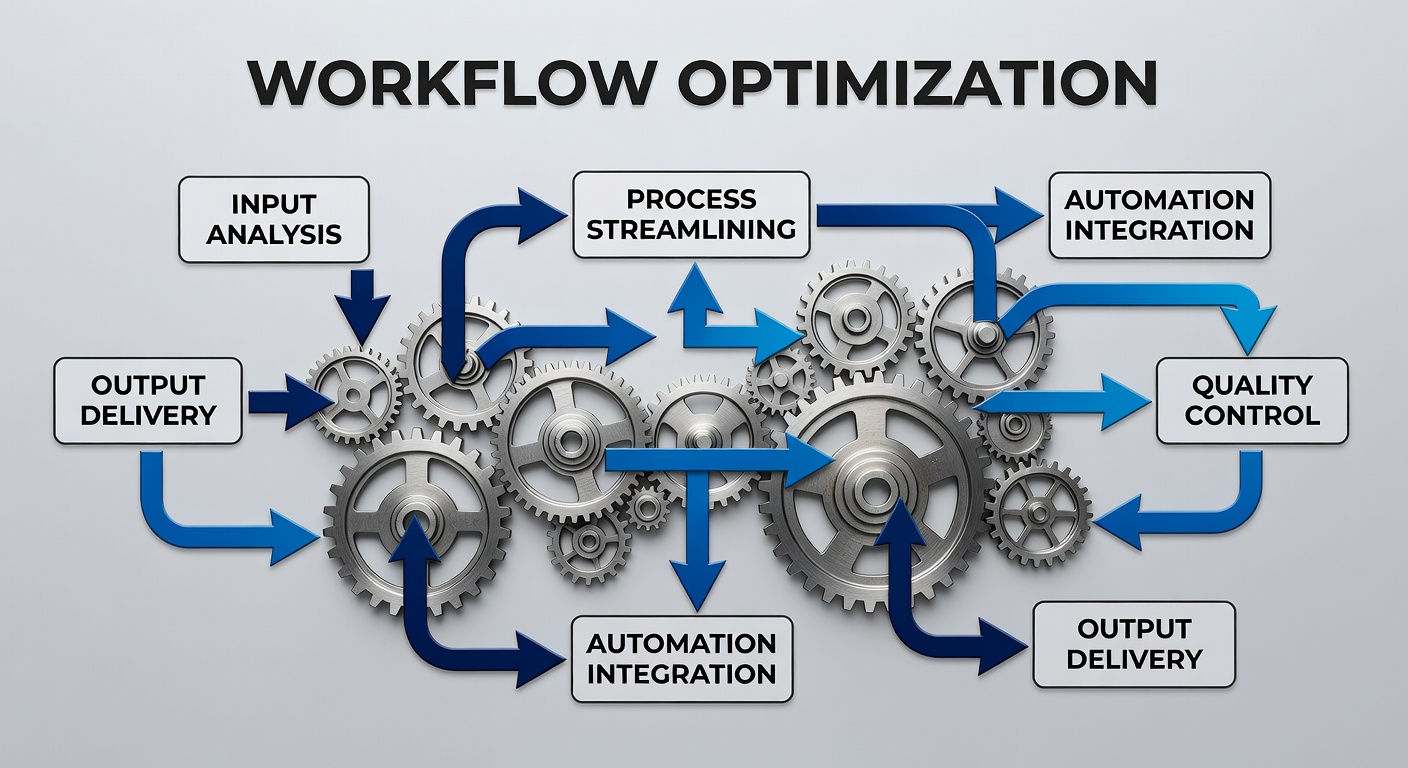
Ethical workflow optimization in a business setting

How We Review and Recommend AI Tools

Our editorial integrity is central to Futureai's value. Every tool recommendation follows these six non-negotiable standards.

1

Independent Testing

Every tool we recommend has been independently tested by our team on real-world tasks. We pay for subscriptions ourselves — no sponsored access.

2

No Paid Placement

Rankings in our AI Tools Directory are based solely on performance, value, and ethics scoring. Vendors cannot pay for higher placement or better scores.

3

Conflict of Interest Disclosure

When a reviewer has any financial relationship with a tool's company — affiliate, investment, or otherwise — we disclose it clearly in the review.

4

Regular Re-Reviews

AI tools change rapidly. We commit to re-reviewing listed tools every six months to ensure our ratings reflect the current version, not last year's release.

5

User Feedback Integration

Reader feedback and community reports inform our reviews. If widespread issues are reported after publication, we update the review and flag the change prominently.

6

Security Assessment

We evaluate each tool's data handling, encryption practices, breach history, and compliance certifications before recommending it to our business audience.

AI Regulations Around the World (2026)

A quick-reference overview of the major AI regulatory frameworks shaping business practices globally.

Region Key Regulation Status Key Requirements for Business
European Union EU AI Act 2.0 Enforced 2026 Risk classification system, mandatory transparency disclosures, human oversight for high-risk AI, CE marking for high-risk systems
United States Executive Order on AI Safety Active Safety testing before deployment, AI content watermarking, mandatory incident reporting, sector-specific guidance for healthcare and finance
Japan AI Guidelines for Business Voluntary Trust and safety principles, human-centric design requirements, fairness and non-discrimination standards, transparency in AI-generated content
United Kingdom UK AI Regulatory Framework Active Innovation-friendly proportionate oversight, sector-specific regulation via existing bodies (FCA, ICO), mandatory fairness and accountability for AI in public services
China AI and Algorithm Regulations Active Algorithm transparency obligations, mandatory content review for generative AI, data localization requirements, registration with government for certain AI systems
AI and thoughtful time management at work

AI Time Well Spent vs. Time Wasted

AI promises to give you time back — but without intentional use, it can just as easily create new forms of distraction, dependency, and shallow work. Here's an honest look at both sides.

Time Well Spent with AI

  • Automating routine formatting and data tasks
  • Rapid first drafts for editing
  • Research aggregation and summarization
  • 24/7 customer FAQ handling
  • Meeting notes and action item extraction

Time Wasted with AI

  • Prompt tweaking without a clear goal
  • Over-relying on AI for strategic judgment
  • Publishing AI content without review
  • Rebuilding prompts that should be saved
  • Using AI for tasks faster done by hand

Ethical AI Resources

Our curated reading list, official references, and community spaces for ethical AI practitioners.

📚

AI Ethics Reading List

  • Atlas of AI — Kate Crawford (2021)
  • The Alignment Problem — Brian Christian (2020)
  • Weapons of Math Destruction — Cathy O'Neil
  • Google's People + AI Research (PAIR) Guidebook
  • Montreal Declaration for Responsible AI
📋

Regulatory Compliance Guides

  • EU AI Act Official Text (EUR-Lex)
  • NIST AI Risk Management Framework
  • UK AI Safety Institute Guidance
  • GDPR AI-specific guidance (ICO)
  • ISO/IEC 42001 AI Management Standard
💬

Community & Discussion

  • AI Ethics Community Forum (Join for free)
  • Partnership on AI — practitioner resources
  • IEEE Ethics in Action initiative
  • Futureai monthly ethics roundtable (virtual)
  • AI Now Institute research updates

Ethical AI — Common Questions

The EU AI Act 2.0, fully enforced in 2026, classifies AI systems by risk level — from unacceptable risk (banned outright) to minimal risk (freely usable). High-risk AI applications, such as those used in hiring, credit scoring, or biometric identification, require transparency disclosures, human oversight mechanisms, and regular conformity assessments. Businesses operating in or serving EU customers must assess which risk category their AI tools fall under and maintain documentation accordingly.
Bias testing requires deliberate effort. Start by testing the tool with diverse inputs representing different demographics, ethnicities, languages, and use cases. Look for inconsistent quality or tone across groups. Check whether the provider publishes bias audits, model cards, or transparency reports. Third-party auditing firms (like Holistic AI or Credo AI) offer formal assessments for enterprise use. Tools used in hiring, lending, or healthcare require the most rigorous and ongoing bias evaluation.
In most jurisdictions, yes — particularly for consequential decisions. The EU AI Act requires disclosure when AI significantly affects users. In the US, sector-specific rules in finance and healthcare mandate transparency. Beyond legal requirements, disclosure is simply good practice: research consistently shows customers appreciate honesty about AI use, and proactive transparency reduces regulatory and reputational risk. A simple note like "This response was generated with AI assistance and reviewed by our team" goes a long way.

Have an AI Ethics Question for Our Team?

We read every message. Whether it's a compliance question, a tool recommendation, or a concern about an AI practice you've encountered — we're here to help.

Reach Out to Futureai →